
Read the full article on the Berkeley Lab News Center website.
Harnessing the power of artificial intelligence to study plant microbiomes — communities of microbes living in and around plants — could help improve soil health, boost crop yields, and restore degraded lands. But there’s a catch: AI needs massive amounts of reliable data to learn from, and that kind of consistent information about plant-microbe interactions has been hard to come by.
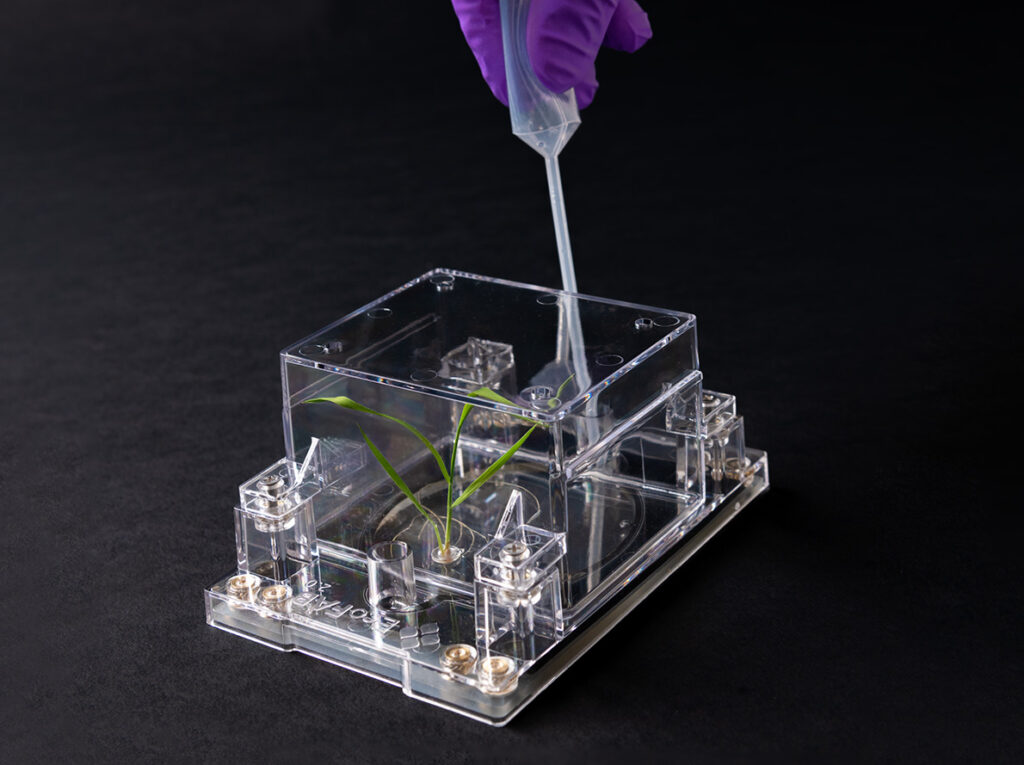
The EcoFAB 2.0 can accommodate small model plants such as Brachypodium distachyon and is compatible with automated systems found in most laboratories. (Credit: Thor Swift/Berkeley Lab)
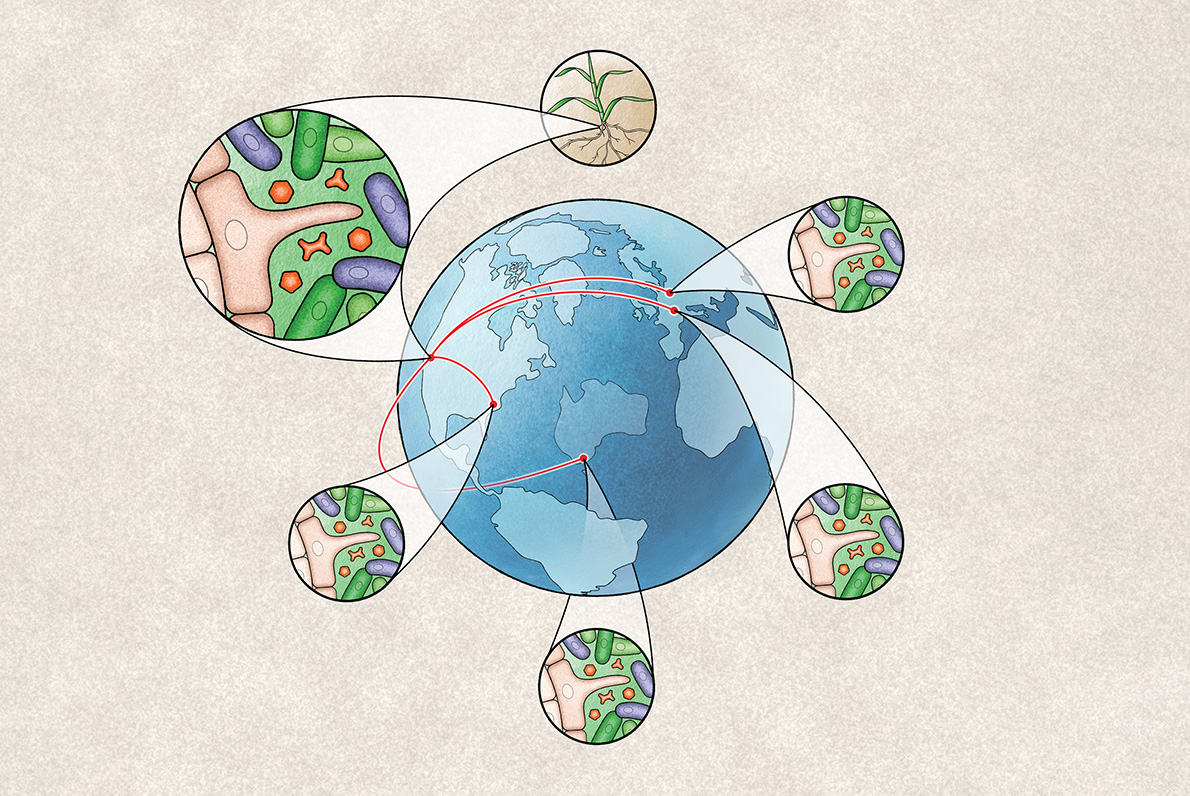
In a new paper in PLOS Biology, Biosciences Area researchers led an international consortium of scientists to study whether small plastic growth chambers called EcoFABs could help solve the problem of reproducibility in studies of plant-microbe interactions. Building on their previous work with microbe-free plants, the scientists used the Berkeley Lab-developed devices to run identical plant–microbe experiments across labs on three continents and got matching results. The breakthrough shows that EcoFABs can remove one of the biggest barriers in microbiome research: the difficulty of reproducing experiments in different places.
“We all know the saying ‘bad data in, bad data out,” said Vlastimil Novak, first author of the paper and a research scientist in Berkeley Lab’s Environmental Genomics and Systems Biology (EGSB) Division. “If you want to make meaningful predictions about microbes and plants, especially with future AI models, you need clean, consistent datasets. EcoFABs provide exactly that.”
