
Read full article on the Biosciences Area website.
Viruses and the organisms they infect are constantly working to outperform one another: the host evolves a way to defend and protect itself, the virus develops a way around and through those defenses, and so the cycle continues. For example, the viruses that infect soil bacteria (phages) can have a major effect on the plant microbiome. Recently, a collaborative effort led by Biosciences Area faculty scientist and m-CAFEs investigator Jennifer Doudna revealed an especially creative way that viruses neutralize the immune response normally triggered by a host cell under invasion.
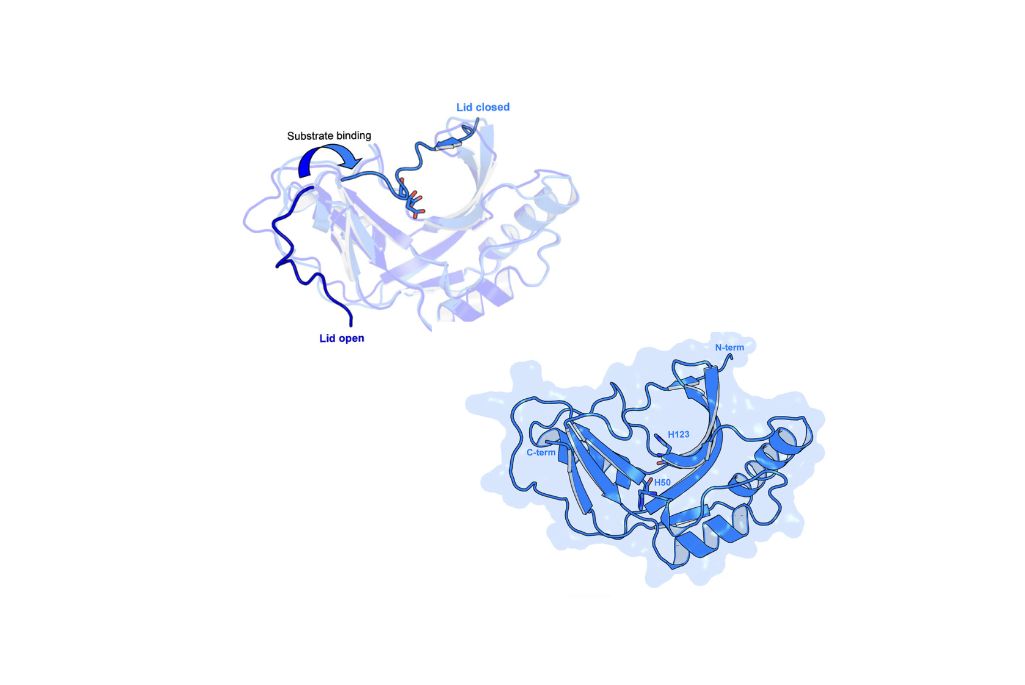
A large and diverse set of enzymes in a virus, known as 2H phosphodiesterases (2H PDEs), act like molecular scissors and cut the oligonucleotides in a host cell that are responsible for triggering an immune response. With the host cell’s immune response effectively silenced, the virus can invade and replicate.
“Viruses are constantly evolving and working to outsmart the defense systems of their hosts,” said Adam Deutschbauer, a senior scientist in the Biosciences Area and m-CAFEs Technical Co-manager also involved in this work. “And they affect many hosts including bacteria, humans, and plants, so identifying molecular mechanisms of immune evasion are crucial for our understanding of everything from nutrient cycling in the environment to human health. ”
