
Read full article on the Advanced Light Source website.
Wildfires are becoming more frequent and severe across the globe, especially in the western United States. Not only do they burn vegetation, they also change the chemistry of the soil in unknown ways. Researchers are examining individual ash and soil particles to learn which minerals form during a fire and how they influence nutrient mobility and ecosystem recovery later.
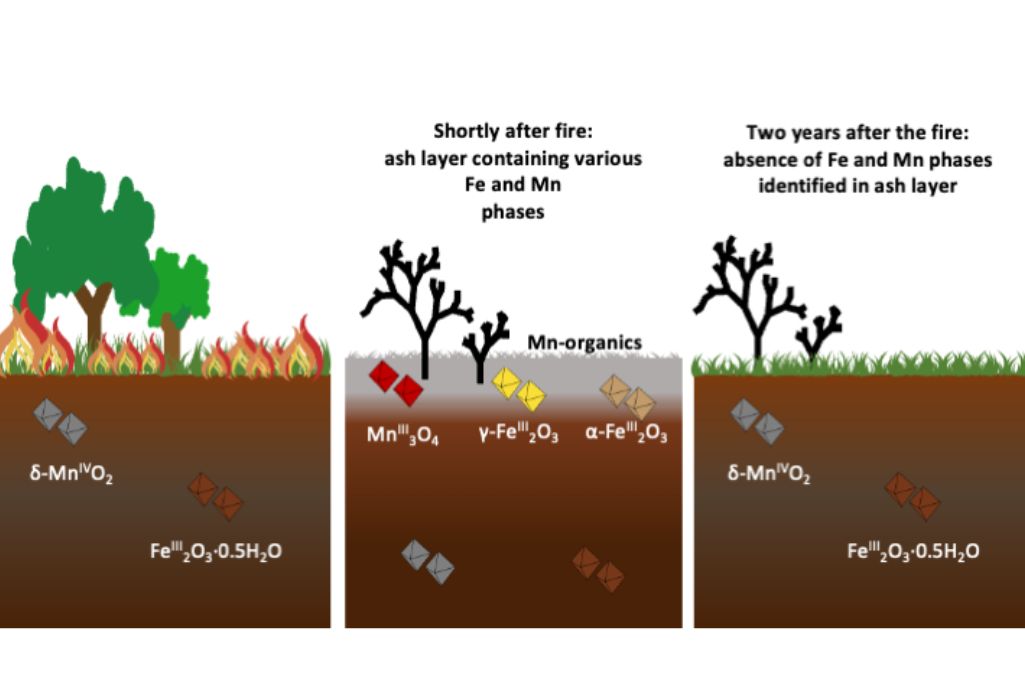
Following a wildfire, ash deposited on the soil surface contains a mixture of burned vegetation, burned soil, and newly formed minerals containing iron and manganese. These essential elements regulate key soil processes, including microbial metabolism, nutrient availability, and organic matter turnover. But researchers know little about how fire alters their molecular-scale form and reactivity.
In this study, Berkeley Lab Earth and Environmental Sciences Area scientists from the Belowground Biogeochemistry Science Focus Area (SFA) team and UC Davis collaborated with scientists from the Advanced Light Source to examine the chemical structure of ash collected three weeks after the 2020 Glass Fire in Northern California and soil samples collected two years later. The samples represent different stages of post-fire soil evolution, allowing the researchers to probe how pyrogenic minerals evolve.
